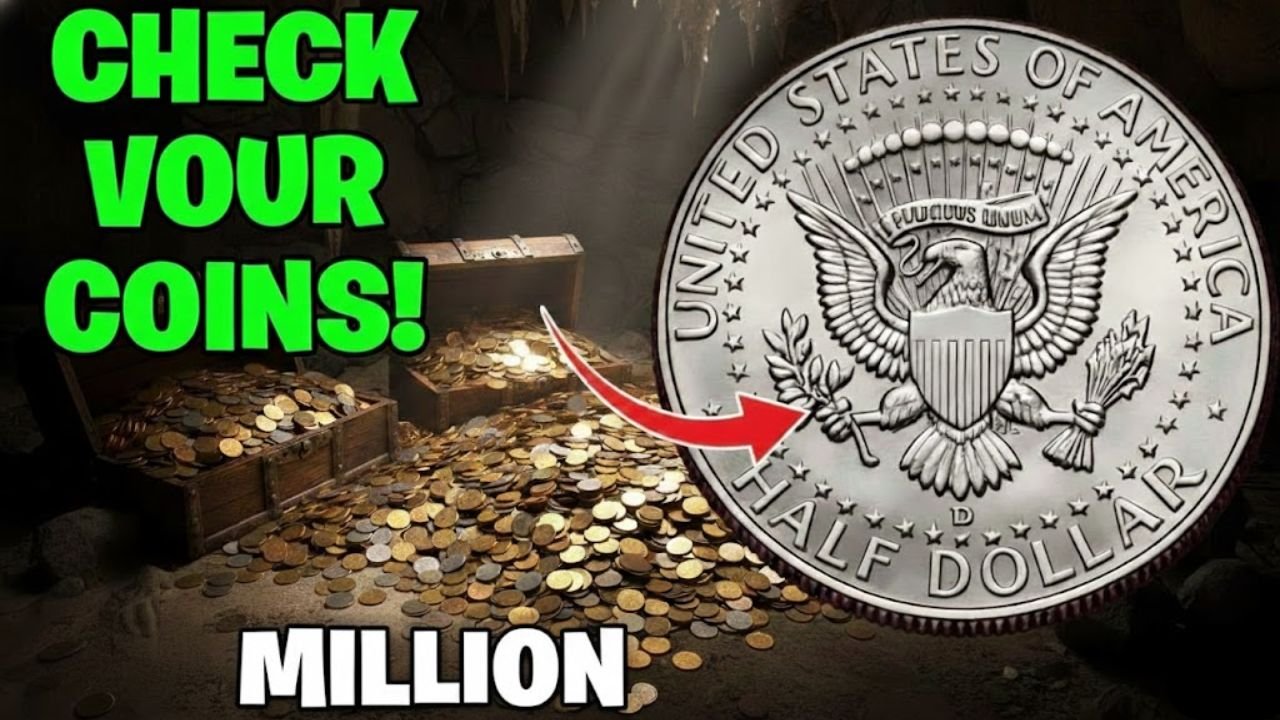
Rare Kennedy Half Dollar Value Guide: In the quiet focus of a collector’s study, under the warm glow of a lamp, a silver coin catches the light. More than just currency, the Kennedy Half Dollar is a pocket-sized piece of American narrative, first struck in 1964 as a nation’s tribute to a fallen president. For many, it’s a first love in the hobby of numismatics—a series that feels both accessible and endlessly deep. While sensational stories of coins worth millions often circulate, the true story of the Kennedy Half Dollar is one of historical resonance, patient discovery, and the quiet thrill of finding rarity in the ordinary. This guide walks alongside you, separating enduring value from fleeting myth.
Unpacking the Legend of the Multi-Million Dollar Coin
You may have heard the whispers: a Kennedy Half Dollar sold for a staggering $6.9 million. In the shared stories of online forums and coin shop conversations, such a tale takes on a life of its own. The truth, however, is grounded in documented history. No Kennedy Half Dollar has ever approached this figure at a legitimate auction. This persistent myth likely blossoms from a human tendency to amplify wonder, perhaps confusing the coin with other numismatic legends like the 1933 Double Eagle. Understanding this allows us to appreciate the real, tangible value these coins hold, which for dedicated collectors, can be treasure enough.
Kennedy Half Dollar: Collector’s Reference Table (2026)
| Aspect | Key Details & Examples |
|---|---|
| Series Introduction | 1964, following the assassination of President John F. Kennedy. |
| Key Designers | Obverse: Gilroy Roberts. Reverse: Frank Gasparro (Heraldic Eagle). |
| Notable Rarities | 1964 Accented Hair Proof: Distinguished by extra hair detail. 1970-D: Issued only in mint sets. 2014-W 50th Anniversary Gold Proof: 0.75 oz of pure gold. |
| Primary Value Drivers | 1. Date & Mint Mark: Scarce issues command premium. 2. Condition (Grade): Professionally graded coins in top condition (MS/PR 65+) are most valuable. 3. Composition: 1964 (90% silver), 1965-1970 (40% silver clad). 4. Errors & Varieties: Doubled dies, off-center strikes, etc. |
| Grading Authorities | Professional Coin Grading Service (PCGS), Numismatic Guaranty Company (NGC). |
| Where to Collect | Coin shows, reputable online dealers, estate sales, inherited collections, bank rolls (for circulation finds). |
| Current Market Tone (2026) | Strong demand for certified key-date rarities and high-grade examples. Common circulation coins remain widely available at low premium. |
What Gives a Kennedy Half Dollar Its True Worth in 2026?
As we look at the market in 2026, a coin’s value is not dictated by myth, but by a clear set of characteristics embraced by the collecting community. The year it was struck, the mint mark (the tiny letter indicating where it was made), its physical condition, and the presence of any unique quirks or errors all weave together to tell its value story. Common coins from the late 1970s onward, found in everyday change, often hold only their 50-cent face value. However, early coins containing silver, special proof editions made for collectors, and those with rare attributes tell a different, more valuable tale.

The Stars of the Series: Notable and Rare Varieties
Within the long run of the Kennedy series, a few specific issues have earned legendary status. The 1964 Accented Hair proof is a prime example, where finer details in Kennedy’s hair, struck only in the earliest trial pieces, make it a coveted prize. The 1970-D, minted only in that year’s special collector sets and never released for circulation, is another cornerstone rarity. Even modern issues, like the 2014 50th Anniversary gold half dollar, command significant respect and price due to their limited nature and precious metal content. These are the benchmark coins that collectors dream of.
When Mistakes Become Masterpieces: The Allure of Error Coins
Perhaps the most human element of coin collecting is the fascination with error—the unique piece that slipped past the mint’s perfect machines. A doubled impression on the lettering, an off-center strike, or a clip taken out of the metal blank are not flaws to collectors, but stories frozen in metal. These accidental survivors, each one uniquely imperfect, can transform an ordinary coin into a centerpiece of a collection, often fetching substantial premiums for their one-of-a-kind nature.

A Guide for the Curious: Starting Your Own Collection
Beginning a collection is a personal journey of connection and learning. It often starts with a single coin, perhaps one inherited or found in an old drawer. From there, the path unfolds: learning to identify mint marks, understanding grading terms like “Brilliant Uncirculated,” and feeling the satisfying weight of a silver composition versus a clad one. Many find joy in the simple, meditative hunt through bank rolls, a modern-day treasure hunt where patience is the key virtue. The goal is not necessarily instant wealth, but the slower, richer reward of building a meaningful assemblage of history.
Frequently Asked Questions (FAQ)
Q: I found a regular Kennedy half dollar from the 1980s in my change. Is it worth more than 50 cents?
A: Typically, a circulated Kennedy half dollar from the 1980s or later (with a copper-nickel clad composition) is worth its face value of 50 cents for spending. Its value to a collector lies primarily if it is in absolutely pristine, uncirculated condition or has a notable error.

Q: How can I tell if my 1965-1970 half dollar contains silver?
A: The easiest way is to examine the coin’s edge. A silver-clad coin (40% silver for these years) will have a distinct silver stripe sandwiched between two copper-colored layers on the rim. A fully copper-nickel coin will show a uniform copper color on its edge.
Q: What’s the most important first step if I think I have a rare coin?
A: Research, then verify. Compare your coin closely to images of known rare varieties from trusted sources like the PCGS CoinFacts or NGC Coin Explorer. Handle it carefully by the edges. If you believe it may be genuinely valuable or high-grade, consider submitting it to a professional grading service (PCGS or NGC) for authentication and encapsulation.

Q: Is collecting Kennedy half dollars a good investment?
A: As with any collectible, it should first be a passion. While key-date rarities in top condition have historically appreciated, the market can fluctuate. The most reliable “investment” is in your own knowledge. Collect what you enjoy, focus on quality, and view any financial gain as a potential long-term benefit of your informed participation in the hobby.
Q: Why does the myth of the $6.9 million coin persist?
A: Myths thrive in gaps of knowledge and speak to our hope for hidden, life-changing treasure. In numismatics, they are a reminder to anchor our collecting in verified information and shared community knowledge. The real joy comes from the authentic hunt and the tangible connection to history you hold in your hand.