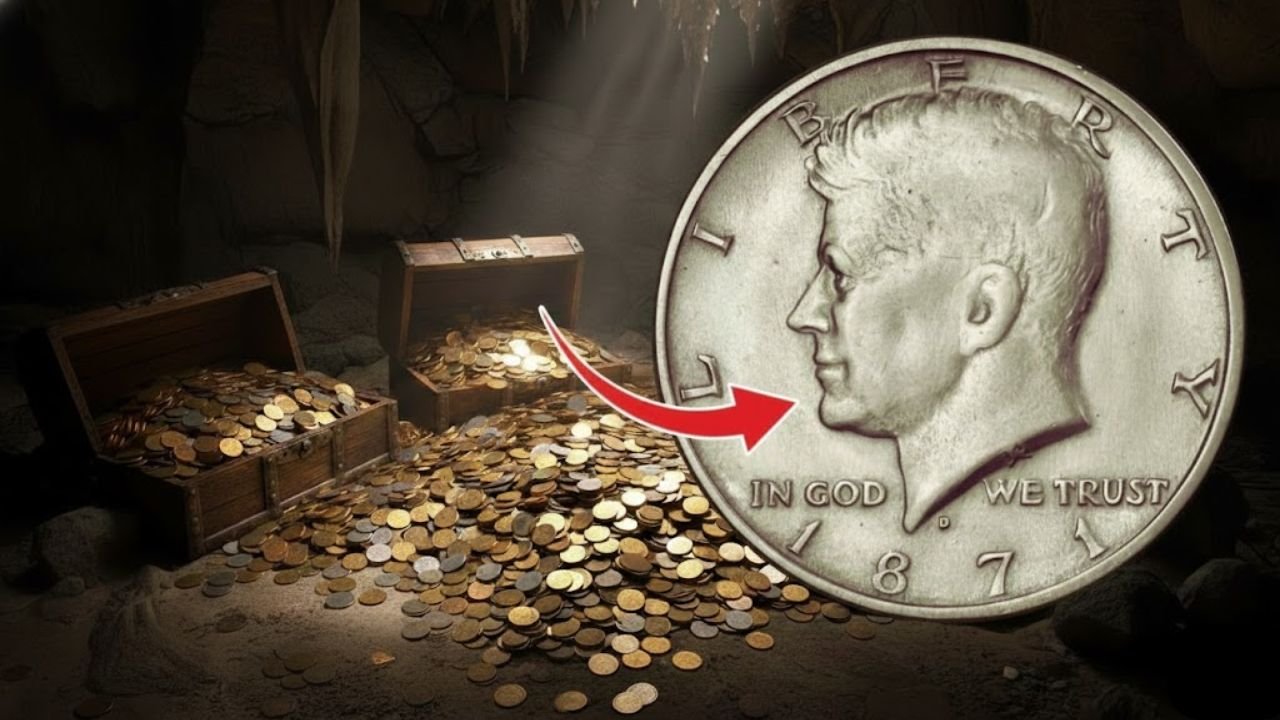
Kennedy Half Dollar Worth $8.9 Million: Few coins in American history carry the emotional weight and immediate recognition of the Kennedy Half Dollar. First struck in 1964, mere months after the nation’s profound loss, its release was less a minting and more a public memorial. Americans lined up not just for new currency, but for a tangible piece of collective remembrance, transforming the coin from mere specie into a cherished keepsake. Today, it remains a powerful symbol, connecting generations through its enduring portrait of a president whose legacy continues to inspire.
Navigating the Landscape of Value
The world of coin collecting is rich with stories, and tales of a Kennedy Half Dollar selling for $8.9 million are among its most persistent modern legends. While such figures capture the imagination, they are rooted more in myth than numismatic reality. These stories often blossom from the remarkable but more modest auction prices achieved by genuine rarities, amplified through retelling. Understanding what truly gives a coin worth—its condition, rarity, and historical context—is the first step in appreciating the real treasure these pieces represent, beyond any sensational headline.
Kennedy Half Dollar: Collector’s Reference Table
| Category | Key Details & Notes |
|---|---|
| First Issued | 1964 (Authorized December 1963) |
| Designer | Gilroy Roberts (Obverse), Frank Gasparro (Reverse) |
| Historical Composition | 1964: 90% Silver, 10% Copper 1965–1970: 40% Silver, 60% Copper 1971–Present: Copper-Nickel Clad |
| Key Dates/Varieties | 1964 (90% Silver): First year of issue. 1964 “Accented Hair” Proof: Scarce variety with finer hair detail. 1970-D: Minted only for collectors in special sets. 1987: No coins struck for circulation; mint & proof sets only. |
| Notable Errors | Off-center strikes, double dies, and wrong planchet errors (e.g., struck on a silver dollar blank). |
| Grading Scale | Sheldon Scale (1–70); “MS” (Mint State) for uncirculated, “PR” (Proof) for specially finished coins. |
| Current Circulation | Limited; primarily minted for collectors and sold at a premium. |
| Primary Value Drivers | Silver content (pre-1971), condition (grade), rarity (mintage/variety), and certified authenticity. |
What Truly Defines a Coin’s Worth
A coin’s monetary value is a delicate equation. Its rarity is paramount; low mintage figures or unique production errors create immediate collector demand. Yet, condition is equally critical. A coin preserved in pristine, untouched “Mint State” can be worth a hundred times more than its worn, circulated counterpart. For the Kennedy Half Dollar, historical significance is baked into its very metal, with early silver issues holding both intrinsic material value and deep sentimental appeal. This interplay of factors turns some coins into noteworthy assets, while others remain beloved tokens of history.

Key Releases and Notable Variations
For collectors, certain Kennedy Half Dollars stand out. The 1964 issue, composed of 90% silver, is the original and most historically poignant. Special “proof” coins, struck with polished dies for a mirror-like finish, are perennial favorites. Among the most sought-after are specific varieties like the 1964 “Accented Hair” proof, where finer detail is visible in Kennedy’s portrait, or the rare 1970-D, issued only in mint sets for collectors. These specific dates and variations form the cornerstone of a specialized collection, each with its own story and market following.
When Mistakes Become Marvels
In numismatics, perfection is often valued, but error can be priceless. Occasional mistakes at the U.S. Mint—a double-struck design, an off-center impression, or a coin struck on the wrong metal blank—create unique, one-of-a-kind artifacts. For Kennedy Half Dollars, such errors are exceptionally rare but highly prized. A well-documented error coin, like one struck on a silver dollar planchet, becomes a fascinating historical accident, its value propelled by its uniqueness and the compelling story of its creation.

The Critical Role of Professional Authentication
In a field where minute details dictate major value, professional grading is indispensable. Independent services assess a coin on the Sheldon scale from 1 to 70, evaluating its strike, surface preservation, and luster. A small plastic holder encapsulates this expert opinion, providing a guarantee of authenticity and condition. For a high-grade Kennedy Half Dollar, this certification can transform it from an interesting piece into a secure, liquid asset, giving both buyer and seller confidence in its stated worth.
Building a Thoughtful Collection
Beginning a collection should be a journey of enjoyment and education. The Kennedy Half Dollar series is an ideal starting point, with accessible, affordable examples readily available. A sensible approach is to start by collecting one coin from each year and mint, learning to observe mint marks and design details. From this foundation, a collector might focus on assembling all silver issues (1964-1970) or seeking out higher-grade specimens. Resources like the American Numismatic Association, local coin clubs, and reputable dealer networks provide invaluable guidance and community.

Stewardship for the Future
Preserving a coin is an act of historical conservation. Coins should always be handled by their edges and stored in archival-quality holders designed to protect from PVC, sulfur, and moisture. Crucially, a collector should never clean a coin; even gentle polishing can permanently diminish its surface and its value. Proper stewardship ensures these miniature pieces of history can be passed down, their stories and condition intact, for future generations to study and admire.
Frequently Asked Questions (FAQ)
Q: Is it true there’s a Kennedy Half Dollar worth $8.9 million?
A: No, this is a pervasive myth. While certain rare error coins or pristine specimens of key dates can be very valuable (ranging into the tens of thousands), no Kennedy Half Dollar has ever sold for anything close to $8.9 million. The story is an exaggeration that underscores the public fascination with coin collecting.

Q: How can I tell if my old Kennedy Half Dollar is silver?
A: Check the date. All coins dated 1964 are 90% silver. Coins dated 1965 through 1970 are 40% silver. Any Kennedy Half Dollar dated 1971 or later has no silver content in its core, except for special silver proofs sold directly to collectors.
Q: What is the single most important factor in determining my coin’s value?
A: Condition is paramount. A coin in flawless, uncirculated condition can be worth exponentially more than an identical coin that shows wear. This is why professional grading and authentication are so critical for valuable pieces.
Q: I found a coin with a mistake on it. What should I do?
A: Handle it carefully by the edges and do not attempt to clean it. Research common error types online through reputable numismatic websites, and consider having it evaluated by a certified coin dealer or submitting it to a professional grading service for authentication.
Q: Are Kennedy Half Dollars still being made, and can I spend them?
A: Yes, the U.S. Mint still produces them, primarily in annual proof and uncirculated sets for collectors. While they remain legal tender with a face value of 50 cents, their collector or silver value almost always exceeds that, so they are rarely seen in everyday circulation.