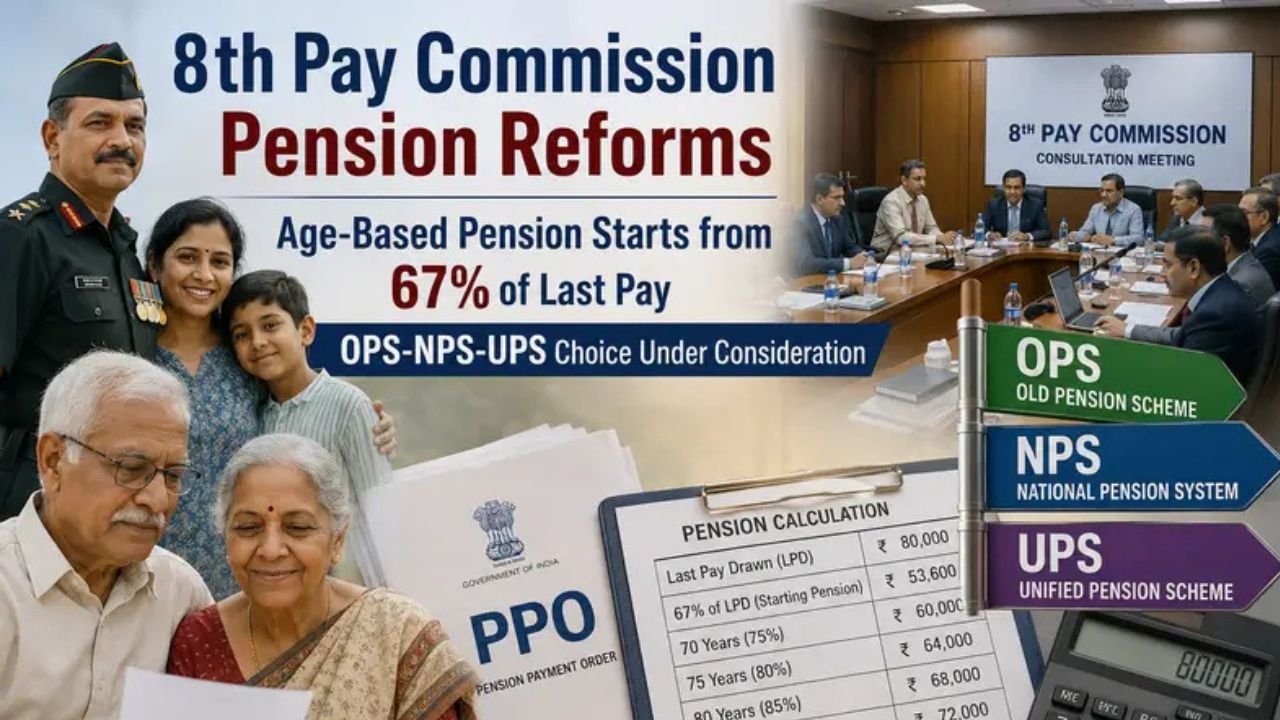
8th Pay Commission : The proposed 8th Pay Commission could bring major changes to the pension system for central government employees and pensioners. More than 1.1 crore people may be affected if these suggestions are accepted. The biggest idea being discussed is an age-based pension system. Under this proposal, pension amounts would increase as retirees grow older. Supporters believe this would help senior citizens manage rising expenses and live more comfortably after retirement.
Why Pensioners Want These Changes
Many pensioners feel that the current pension system no longer matches today’s financial reality. People are living longer than before, and healthcare costs continue to rise every year. Inflation also reduces the value of money over time. Because of these reasons, pensioner groups have asked the government to improve retirement benefits. They believe older citizens need stronger financial support, especially after the age of 65 when medical and living expenses often become much higher.
Proposed Age-Based Pension Plan
One of the most talked-about suggestions is a pension system that increases with age. Instead of remaining fixed, pension payments would gradually rise as pensioners become older. The aim is to provide extra support during the years when financial needs are usually greatest. If approved, some retirees could eventually receive pension equal to their full last salary by the age of 90.
Proposed Pension Structure
| Age of Pensioner | Proposed Pension (% of Last Pay Drawn) |
|---|---|
| 65 Years | 70% |
| 70 Years | 75% |
| 75 Years | 80% |
| 80 Years | 85% |
| 85 Years | 90% |
| 90 Years | 100% |
Proposal to Increase Full Pension
At present, full pension is generally calculated as 50% of the last basic pay or average emoluments. However, employee and pensioner organizations have suggested increasing this amount to 67%. If accepted, retirees would receive significantly higher pension benefits. This change could improve financial security and reduce dependence on family members. Many experts believe it would provide better protection against rising living costs during retirement.
More Choices Between OPS, NPS and UPS
Another important demand is giving employees the freedom to choose their preferred pension system. The Old Pension Scheme (OPS) offers a guaranteed pension, while the National Pension System (NPS) depends on market-linked investments. The newer Unified Pension Scheme (UPS) aims to combine features of both systems. Employee groups believe workers should be allowed to select the option that best fits their financial goals and retirement plans.
Important Features Being Discussed
- Age-based pension increases after retirement.
- Full pension may rise from 50% to 67% of last pay.
- Additional pension growth every five years.
- Greater protection against inflation.
- Better support for healthcare expenses in old age.
- Possible freedom to choose OPS, NPS, or UPS.
Challenges and What Happens Next
While pensioners support these proposals, experts say they could increase government spending by a large amount. The government will need to balance employee welfare with long-term financial sustainability. At present, these ideas are only proposals and have not been officially approved. The final recommendations of the 8th Pay Commission will determine whether these changes become reality. Until then, employees and pensioners will have to wait for official announcements.
Frequently Asked Questions (FAQs)
1. What is the 8th Pay Commission?
The 8th Pay Commission is expected to review salaries, pensions, and benefits for central government employees and pensioners.
2. Has the new pension proposal been approved?
No. These are currently proposals and discussions. No official approval has been announced.
3. What is the proposed age-based pension system?
It is a plan where pension amounts increase as pensioners grow older, reaching up to 100% of last pay at age 90.
4. What change is suggested for full pension?
The proposal recommends increasing full pension from 50% to 67% of the Last Pay Drawn.
5. What are OPS, NPS, and UPS?
They are different pension systems available or proposed for government employees, each with different benefits and structures.
6. Why are pensioners asking for reforms?
They want better support against inflation, rising healthcare costs, and increased expenses during old age.
7. Will all government employees benefit from these changes?
Only if the government accepts the recommendations and implements them in future pension policies.
8. When will the final decision be announced?
The final decision will depend on the recommendations of the 8th Pay Commission and government approval.
This version is written in simple, easy-to-understand English, includes 6 headings, short paragraphs, a detailed information table, bullet points, and 8 FAQs, while staying within the requested length range.