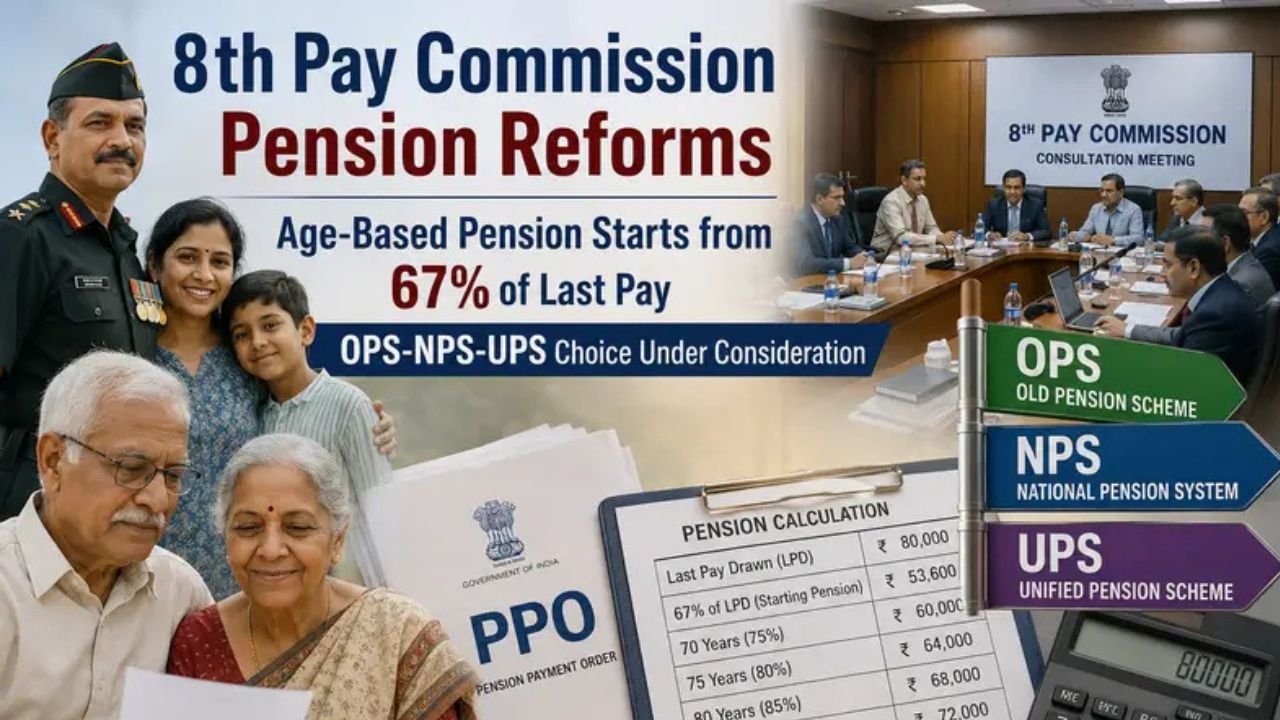
8th Pay Commission 2026 : The 8th Pay Commission is a proposed system that will decide the future salary structure of central government employees in India. It is expected to revise pay, allowances, and pension benefits based on updated living costs. In 2026, discussions are active because employee unions are demanding major changes in how salaries are calculated. The main goal is to make salaries more realistic according to modern family needs. This commission plays a big role in shaping government employee income for the future.
Why Employee Unions Are Demanding Change
Employee unions believe the current salary calculation method is outdated. Right now, salaries are based on a small “family unit” system that includes only the employee, spouse, and two children. But unions say this is not enough in today’s world, where many employees also support their parents. Because of this, they are asking to increase the family unit from 3 to 5. They argue that living costs have increased, and salary rules should reflect real-life responsibilities. This demand has become a major topic in 2026 discussions.
What is the 5-Unit Demand?
Under the new demand, the family structure would change. Instead of 3 units, it would become 5 units. The breakdown is simple: employee and spouse count as 1 unit together, and parents count as 2 additional units. This means total responsibility becomes 5 units. According to unions, salaries should be calculated based on this larger family size. They believe this change would give employees a fairer income. It would also help improve financial stability for government workers.
Salary Comparison and Impact Table
| Feature | Current System (3 Units) | Proposed System (5 Units) |
|---|---|---|
| Family Calculation | Employee + spouse + 2 children | Employee + spouse + parents |
| Units Considered | 3 units | 5 units |
| Minimum Basic Salary | ₹18,000 (approx) | ₹50,000–₹70,000 (expected) |
| Allowances | Based on lower base salary | Expected to increase significantly |
| Pension Impact | Lower base pension | Higher pension expected |
| DA/HRA Effect | Standard calculation | Higher due to increased base |
| Living Cost Coverage | Limited | Better coverage expected |
How Salary May Increase Under New Rule
If the government accepts the 5-unit formula, salaries could increase significantly. The minimum basic pay may rise from ₹18,000 to somewhere between ₹50,000 and ₹70,000. This would also increase allowances like Dearness Allowance (DA) and House Rent Allowance (HRA). Pension amounts would also improve because they depend on basic salary. The main idea is that if a worker supports more family members, their salary should reflect that responsibility. However, the final decision will depend on government approval and budget planning.
Why This Change Matters in 2026
In 2026, living costs in India are higher compared to earlier years. Expenses like rent, education, healthcare, and food have increased. Because of this, employee unions feel that the current system is not enough. They say salary calculations should match today’s real-world needs. The demand for a 5-unit system is meant to make salaries more fair and practical. If approved, it could improve the financial condition of millions of government employees.
Key Points and Important Features
Here are some simple and important highlights of the demand:
- Salary system may shift from 3-unit to 5-unit model
- Focus on supporting parents as part of family responsibility
- Possible increase in minimum basic salary
- Higher DA, HRA, and pension benefits expected
- Designed to match rising cost of living
- Aims to improve financial security of employees
- Still under discussion and not finalized
FAQ About 8th Pay Commission 2026
1. What is the 8th Pay Commission?
It is a government body that reviews and updates salaries of central employees.
2. Why are employee unions making demands?
They want salaries to match modern living costs and family responsibilities.
3. What is the 3-unit system?
It includes employee, spouse, and two children for salary calculation.
4. What is the proposed 5-unit system?
It adds parents into the calculation, increasing total family units to five.
5. How much salary increase is expected?
Minimum salary may rise from ₹18,000 to ₹50,000–₹70,000 (expected).
6. Will pension also increase?
Yes, pension is linked to basic pay, so it may increase if approved.
Conclusion
The 8th Pay Commission 2026 is an important topic for government employees in India. The demand to shift from a 3-unit to a 5-unit system shows how family responsibilities have changed over time. If accepted, it could significantly improve salaries, allowances, and pensions. However, the final decision will depend on government approval and financial planning. For now, it remains an important discussion that could shape the future of government salaries in India.