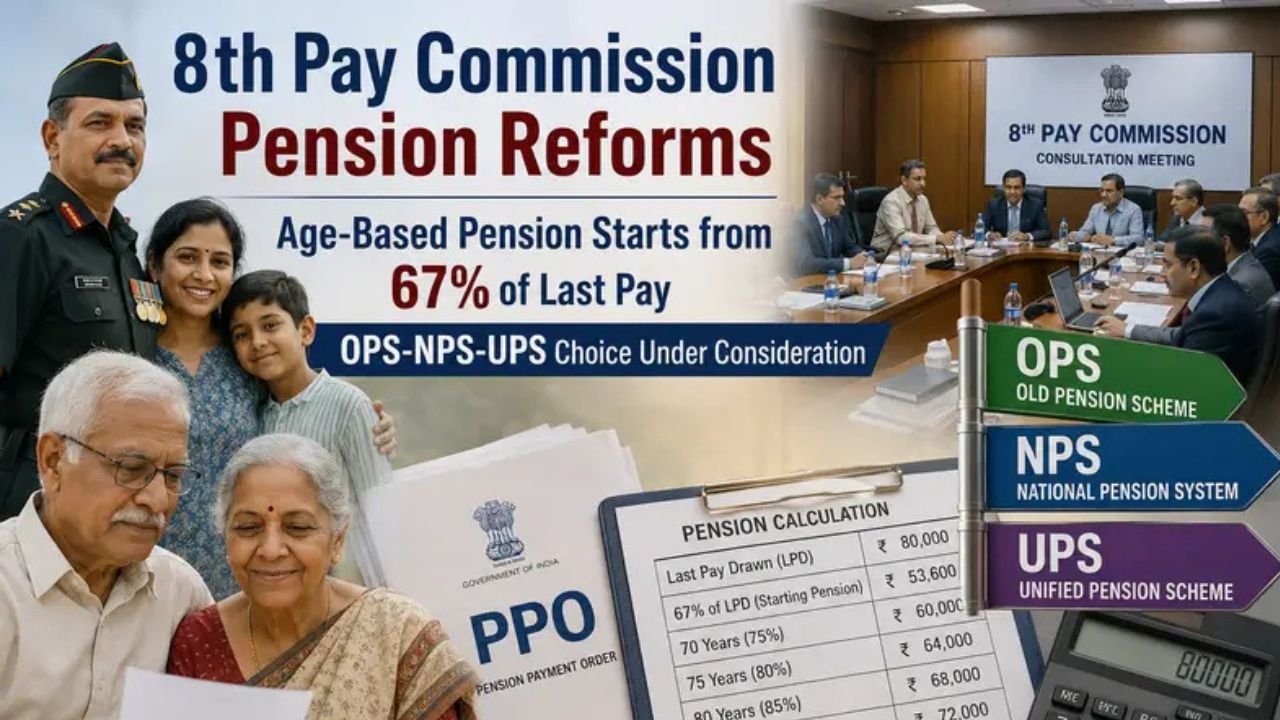
Unified Pension Scheme 2026 : The Unified Pension Scheme (UPS) is a new pension system started by the Government of India for central government employees. It was approved to give more stability and security after retirement. The scheme officially became effective from 1 April 2025 and is being widely implemented in 2026. It is designed to combine the benefits of the Old Pension Scheme (fixed income) and the New Pension Scheme (market-based savings). In simple words, UPS tries to give employees a more predictable and safe retirement income. This makes it an important reform for government workers.
Why UPS Was Introduced
Before UPS, many employees were part of the New Pension Scheme (NPS), where pension depended on market performance. This created uncertainty because returns were not fixed. UPS was introduced to reduce this uncertainty and give employees a more stable future. It also respects the idea of long-term government service by ensuring a guaranteed pension. Many employees wanted a system that gives both safety and fairness. UPS tries to balance these needs in a practical way. It is now becoming a major part of India’s pension system in 2026.
Main Features of UPS
UPS offers several important benefits for employees after retirement. Employees who complete at least 25 years of service can receive 50% of their average basic salary from the last 12 months as pension. In case of death, the family receives 60% of the pension as support. Even employees with at least 10 years of service get a minimum pension of ₹10,000 per month. Along with this, pension amounts are adjusted for inflation using Dearness Relief. A one-time payment is also given at retirement based on years of service.
UPS Scheme Details at a Glance
| Feature | Details |
|---|---|
| Scheme Name | Unified Pension Scheme (UPS) |
| Launch Date | 1 April 2025 |
| Fully Active From | 2026 |
| Minimum Service Required | 10 years |
| Full Pension Eligibility | 25 years of service |
| Pension Amount | 50% of last 12 months average basic pay |
| Family Pension | 60% of employee pension |
| Minimum Pension | ₹10,000 per month |
| Inflation Benefit | Dearness Relief (AICPI-IW based) |
| Employee Contribution | 10% |
| Government Contribution | 18.5% |
| Lump Sum Payment | Yes, at retirement |
UPS vs Old Pension System
UPS is often compared with the New Pension Scheme because both are widely used. Under UPS, pension is more stable because it is partly guaranteed. In contrast, the New Pension Scheme depends on market returns, which can go up or down. UPS also increases the government’s contribution, which helps improve retirement security. Employees also continue contributing 10% of their salary. Another big difference is inflation protection, which is included in UPS but not fully in NPS. This makes UPS more predictable for long-term planning.
Important Benefits for Employees
UPS is designed to give employees peace of mind after retirement. It ensures that long service is rewarded with a stable income. It also supports families in case of unexpected situations like death of the employee. The inclusion of inflation adjustment helps pension keep its value over time. The lump sum payment at retirement provides extra financial support. Overall, it gives a mix of safety, stability, and long-term security. This makes it a strong improvement in India’s pension system.
Key Features and Useful Points
Here are some simple and important points about UPS:
- Guarantees fixed pension for eligible employees
- Supports families with regular income after employee’s death
- Protects pension from inflation changes
- Provides a lump sum retirement payment
- Encourages long-term government service stability
- Combines safety of old pension and structure of new system
- Helps employees plan a secure retirement life
FAQ About Unified Pension Scheme 2026
1. What is the Unified Pension Scheme?
It is a government pension system that gives employees a more stable retirement income.
2. When did UPS start?
It was approved in 2025 and is actively implemented in 2026.
3. Who can get full pension under UPS?
Employees with 25 years or more of service are eligible.
4. What is the minimum pension under UPS?
The minimum pension is ₹10,000 per month after 10 years of service.
5. Does UPS protect against inflation?
Yes, it includes Dearness Relief to adjust for rising prices.
6. How is UPS different from NPS?
UPS offers more guaranteed pension benefits, while NPS depends on market returns.
Conclusion
The Unified Pension Scheme 2026 is an important step for improving retirement security for government employees. It combines fixed income stability with modern contribution systems. By offering guaranteed pension, family lsupport, and inflation protection, it reduces financial uncertainty after retirement. For employees, this means more confidence about the future. UPS is becoming a key part of India’s pension structure and is expected to benefit many families in the coming years.